Aims and Scope
The REMUNOM – Revista Multidisciplinar do Nordeste Mineiro (ISSN 2178-6925) is a multidisciplinary, peer-reviewed, open-access scholarly journal dedicated to publishing research that contributes to the understanding, analysis and solution of scientific, technological, professional, social, educational, environmental and health-related problems.
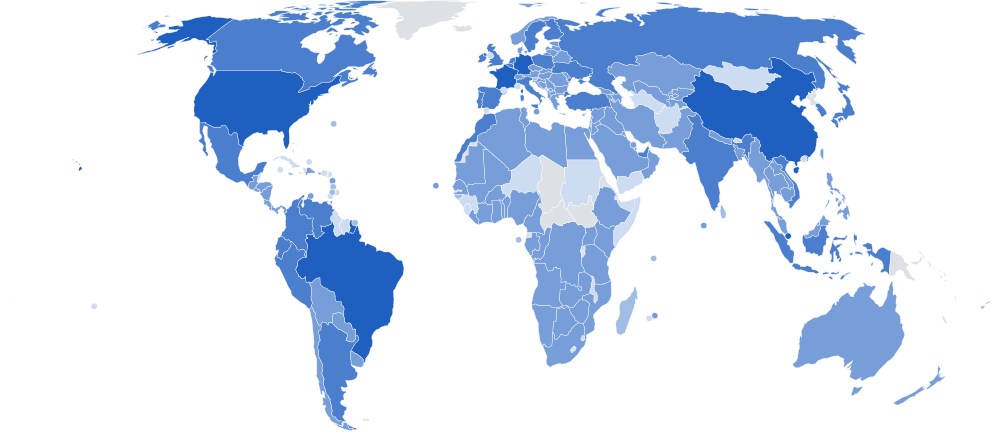
Although the journal's origins and institutional identity are associated with the Northeast region of Minas Gerais, Brazil, REMUNOM does not geographically restrict manuscript submissions. The journal welcomes contributions from researchers and institutions in Brazil and internationally, provided that manuscripts fall within its scientific scope and meet its editorial standards.
REMUNOM prioritizes research presenting a clearly defined research problem, methodological rigor, an identifiable scholarly contribution and relevance to the advancement of knowledge or its application in professional and societal contexts.
The journal's multidisciplinary character does not imply an unrestricted scope. REMUNOM concentrates its scholarly coverage within five major areas: Health Sciences; Technology, Engineering and Applied Sciences; Education and Humanities; Applied Social Sciences; and Regional Development, Sustainability and Environment.
Aims
REMUNOM aims to:
- disseminate original and methodologically rigorous scientific research;
- promote multidisciplinary and interdisciplinary knowledge production;
- strengthen connections between scientific research, professional practice and societal needs;
- encourage scholarly exchange among researchers from different disciplines and institutions;
- publish studies with potential scientific, technological, educational, social, environmental or professional applications;
- contribute to the analysis of contemporary problems in local, regional, national and international contexts;
- expand the circulation and accessibility of scientific knowledge through open-access publishing.
Scientific Scope
1. Health Sciences
REMUNOM publishes research concerning human health, healthcare organization, prevention, diagnosis, treatment, rehabilitation, health promotion and health-professional education.
Topics include:
- medicine and clinical sciences;
- nursing;
- dentistry;
- physiotherapy and rehabilitation;
- pharmacy;
- nutrition;
- public and community health;
- epidemiology;
- mental health;
- maternal and child health;
- occupational health;
- health education;
- health management and policy;
- health technologies and innovation;
- evaluation of healthcare services, interventions and practices;
- interdisciplinary research connecting health sciences with other fields.
The journal particularly welcomes studies with implications for clinical practice, public health, healthcare management, professional education or the development and evaluation of health technologies.
2. Technology, Engineering and Applied Sciences
REMUNOM welcomes studies concerning the development, assessment and application of technologies, methods, systems and engineering solutions.
Relevant topics include:
- artificial intelligence and machine learning;
- data science and analytics;
- information and computing systems;
- software development;
- automation and control;
- engineering and industrial processes;
- digital technologies;
- digital transformation;
- intelligent systems;
- technological innovation;
- process management and optimization;
- computational applications in healthcare, education, management, agriculture and other fields;
- technological sustainability and efficiency.
Studies in this area should demonstrate a clear technical or scientific contribution. Manuscripts consisting solely of descriptions of tools, systems or technologies without meaningful scientific analysis, assessment or application are generally outside the journal's scope.
3. Education and Humanities
REMUNOM publishes studies addressing educational, human, cultural and social processes.
Relevant topics include:
- teaching and learning;
- initial and continuing teacher education;
- pedagogical practices;
- curriculum and assessment;
- inclusive and special education;
- educational technologies;
- innovation in education;
- education policy;
- psychology;
- philosophy;
- history;
- culture and society;
- human behavior;
- relationships among education, technology, health and society.
The journal particularly values manuscripts connecting theoretical foundations with contemporary educational, cultural or social problems and demonstrating a clearly defined scholarly contribution.
4. Applied Social Sciences
REMUNOM welcomes research examining organizations, institutions, policies and economic, legal, administrative and social relationships.
Topics include:
- business administration and management;
- public and private management;
- economics;
- accounting;
- law and legal studies;
- public policy;
- entrepreneurship;
- organizational innovation;
- governance;
- human-resource management;
- labor relations;
- economic and social development;
- strategic planning and management;
- organizational behavior;
- social and institutional responsibility;
- digital transformation in organizations.
Manuscripts should present an identifiable scholarly or applied contribution and should not be limited to purely descriptive presentations of legislation, institutions or professional practices.
5. Regional Development, Sustainability and Environment
REMUNOM also publishes research addressing the relationships among territory, development, sustainability, production, environment and society.
Areas of interest include:
- regional and territorial development;
- sustainable development;
- environmental sustainability;
- natural-resource management;
- environmental impacts;
- agriculture and rural development;
- production systems;
- rural innovation;
- territorial management;
- regional inequalities;
- urban and regional planning;
- development policies;
- social innovation;
- environmental change;
- socioeconomic impacts of policies, technologies and productive activities.
The journal welcomes both regionally focused research and studies conducted in other geographical settings when they provide scientific insights relevant to broader questions of development and sustainability.
Multidisciplinary and Interdisciplinary Approach
Multidisciplinarity is a central principle of REMUNOM, but it is not used as a justification for unrestricted publication of subjects unrelated to the journal's scientific areas.
The journal particularly encourages research establishing meaningful connections between disciplines, including:
- health and technology;
- health and education;
- artificial intelligence and professional applications;
- engineering and sustainability;
- education and digital transformation;
- law and public policy;
- management and innovation;
- agriculture and technology;
- regional development and environment;
- social sciences and health;
- technology and society.
Interdisciplinary manuscripts should clearly demonstrate how concepts, methods or perspectives from different disciplines are integrated and what scholarly contribution results from this integration.
Expected Characteristics of Manuscripts
Manuscripts submitted to REMUNOM should, where applicable, include:
- a clearly defined research problem or question;
- an explicit scientific objective;
- relevant and current theoretical foundations;
- a methodology appropriate to the research objective;
- transparent presentation of research procedures;
- appropriately reported and analyzed results;
- critical discussion in relation to existing scientific literature;
- an identifiable scientific or applied contribution;
- compliance with applicable ethical standards;
- clear alignment with the journal's scope.
The mere presence of a topic within one of the journal's broad disciplinary areas does not automatically establish suitability for publication.
Scientific relevance, methodological rigor and the contribution of the study are also considered during initial editorial screening.
Types of Contributions
Depending on the nature of the study and applicable editorial requirements, REMUNOM may consider:
- original research articles;
- systematic reviews;
- integrative reviews;
- scoping reviews;
- narrative reviews with a clearly defined scholarly contribution;
- case studies;
- methodological studies;
- qualitative research;
- quantitative research;
- experimental studies;
- observational studies;
- documentary analyses;
- theoretical studies;
- technical articles presenting a scientific contribution;
- multidisciplinary and interdisciplinary studies.
All submissions undergo initial editorial screening and, when considered suitable, the journal's peer-review process.
Out-of-Scope Content
REMUNOM may reject at the editorial screening stage manuscripts that:
- do not present a clearly identifiable scientific question or contribution;
- consist primarily of personal opinion, general dissemination or non-scholarly content;
- are exclusively commercial or promotional;
- merely describe tools, institutions or procedures without scientific analysis;
- lack methodology or theoretical foundations appropriate to the type of study;
- fall outside the journal's defined scientific areas;
- present ethical concerns;
- do not meet REMUNOM's minimum scientific and editorial standards.
Target Audience
REMUNOM is primarily intended for:
- researchers;
- academics and faculty members;
- postgraduate students;
- undergraduate students engaged in scientific research;
- professionals;
- managers;
- policymakers;
- academic and research institutions;
- professionals involved in the application of scientific knowledge.
Journal: REMUNOM – Revista Multidisciplinar do Nordeste Mineiro
ISSN: 2178-6925
Publisher: Editora Unified Journals Network – UJN
Publishing Model: Open Access
Editorial Model: Peer-reviewed multidisciplinary scholarly journal
Geographic Scope: National and international